Long, thick and chewy. Why everyone loves Udon noodles

Udon is the comfort food of the noodle world. Long, thick and chewy, it can sit in a simple hot broth in winter, take a heavy sauce in the wok or be served ice-cold in summer, and it still tastes like udon. For a kitchen, that versatility is the whole point: one noodle, every season, many menus. Here is what udon noodles are, what they are made of, how they compare with soba and ramen, and how pre-cooked udon works in a professional kitchen.
What are udon noodles?
Udon is a thick Japanese noodle made from wheat flour. It is white, soft on the outside and pleasantly chewy in the middle, with a smooth, slippery surface that slides through a light broth or a sticky sauce. Udon is traditionally served hot in winter and chilled in summer.
There is no single official thickness. Width and shape vary by region, from flat ribbons to the square-cut noodles of Kagawa, but all udon is noticeably thicker than ramen or soba.
Our udon noodles are pre-cooked and need only 5–7 minutes in boiling water.
What are udon noodles made of?
Udon noodles are made of just wheat flour, water and salt. No egg, no alkaline salts, no buckwheat. That short list is exactly why udon is white rather than yellow, and why its bite is soft and chewy rather than springy like ramen.
The chew comes from the gluten in the wheat, developed by long kneading and resting. Because udon is a wheat noodle, it is not gluten-free, a common question from guests.
Where udon comes from
The most famous udon region is Kagawa Prefecture on the island of Shikoku, home of Sanuki udon, a firm, square-edged noodle with a chewy texture. Kagawa is so proud of it that in 2011 the prefecture launched a tourism campaign calling itself “Udon Prefecture”.
Local legend says that udon came from China with Kūkai, a monk from Kagawa who studied there, and traces Sanuki udon back about 1,200 years. Historians treat this as a legend rather than a fact, but it says a lot about how deeply the noodle is rooted in the region.
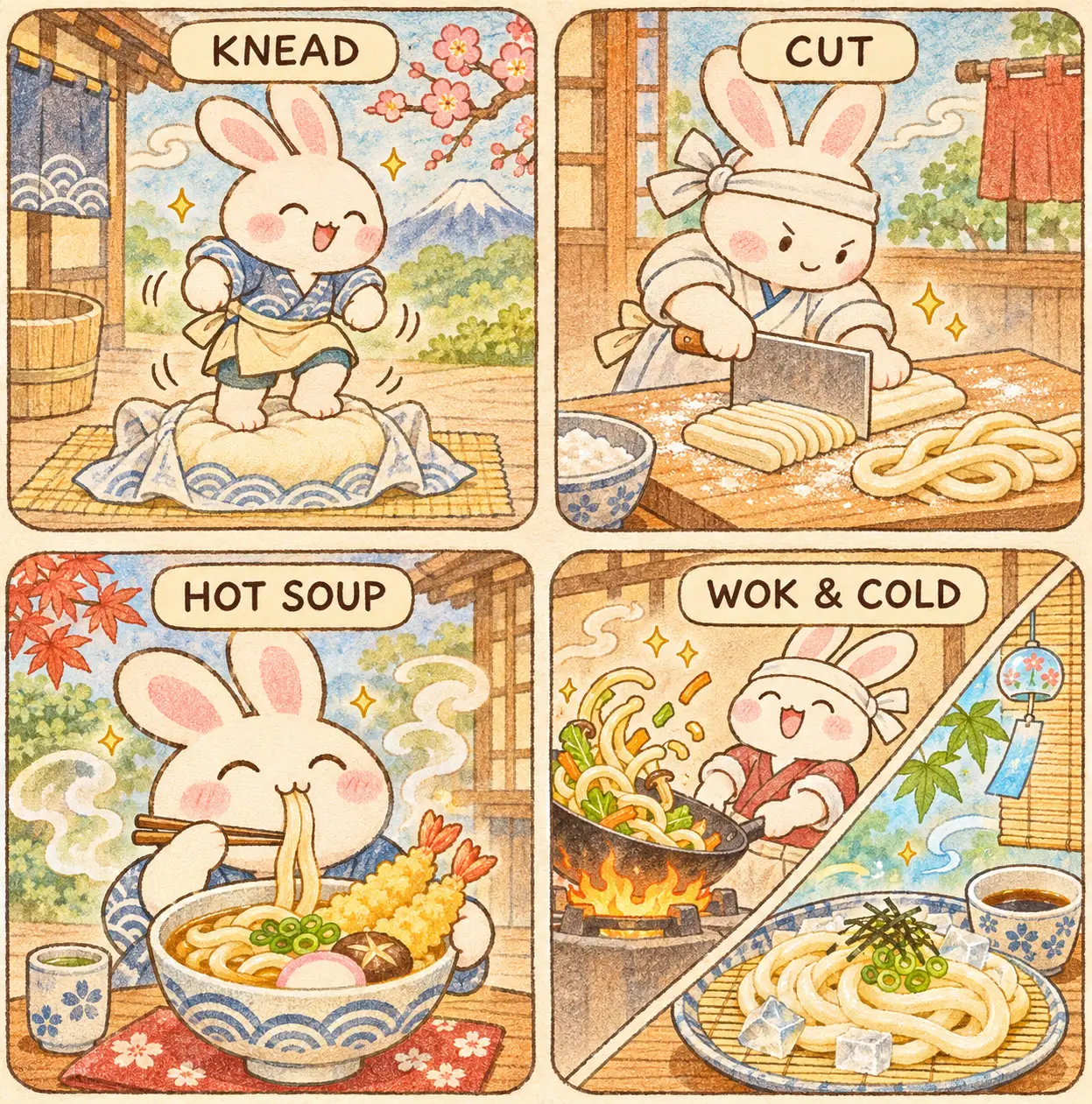
One traditional technique still surprises visitors: according to the Japanese government’s own magazine, Sanuki udon dough is kneaded further with the feet, wrapped in cloth, to build its famous chewiness.
How pre-cooked udon noodles are made
- Mixing. Wheat flour, water and salt are mixed into a firm dough.
- Kneading and resting. The dough is worked to develop the gluten, which gives udon its chew, then rested.
- Sheeting and cutting. The dough is rolled out and cut into thick strands.
- Steaming. The strands are cooked through with steam.
- Drying. The cooked noodles are dried without frying.
- Packing. Into 500 g retail packs or 4 kg and 7.5 kg catering packs.
A thick raw noodle takes a long time to cook through; a pre-cooked one only needs to be brought back to life. For the drying step and why we skip the fryer, see Pre-cooked noodles: what they are and how they’re made.
Udon vs soba vs ramen
| Udon noodles | Soba noodles | Ramen noodles | |
|---|---|---|---|
| Made of | Wheat, salt, water | Buckwheat (often + wheat) | Wheat, salt, water, kansui |
| Thickness | Thick | Thin | Thin to medium |
| Bite | Soft, chewy | Firm, nutty | Firm, springy |
| Colour | White | Grey-brown | Pale yellow |
| Best for | Soups, wok, cold | Cold with dip, hot broth | Rich broths, wok |
| Our time | 5–7 min | 3–4 min | 3–4 min |
Udon vs soba: the biggest difference is the flour. Soba is made with buckwheat, which gives it a nutty flavour and darker colour; udon is pure wheat, mild and chewy. Our soba noodles are the lighter, thinner option.
Udon vs ramen: both are wheat noodles, but ramen gets alkaline salts that make it yellow, thin and springy. Udon is thicker, whiter and softer. The story of ramen is in The hidden history of ramen noodles.
Classic udon dishes
The standard udon dishes cover hot soups, stir-fries and cold plates:
- Kake udon: the simplest udon noodle soup, in a hot, mild broth with green onions.
- Kitsune udon: topped with sweet fried tofu (aburaage).
- Tempura udon: hot broth with a piece of prawn tempura on top.
- Yaki udon: stir-fried udon in a soy-based sauce with meat and vegetables.
- Zaru udon: chilled udon served on a bamboo tray with shredded nori and a dipping sauce.
That range is why udon works on very different menus: a Japanese restaurant, a wok bar, a canteen soup station or a summer salad counter.
Easy udon noodles recipe: yaki udon for 2
A quick stir-fry that shows off the chew of thick noodles.
- 250 g pre-cooked udon noodles
- 150 g chicken thigh or firm tofu, sliced
- 1 small onion, 1 carrot and a handful of cabbage, sliced
- 2 tbsp soy sauce, 1 tbsp oyster sauce (or mushroom sauce), 1 tsp sugar
- 1 tbsp oil, spring onion to finish
-
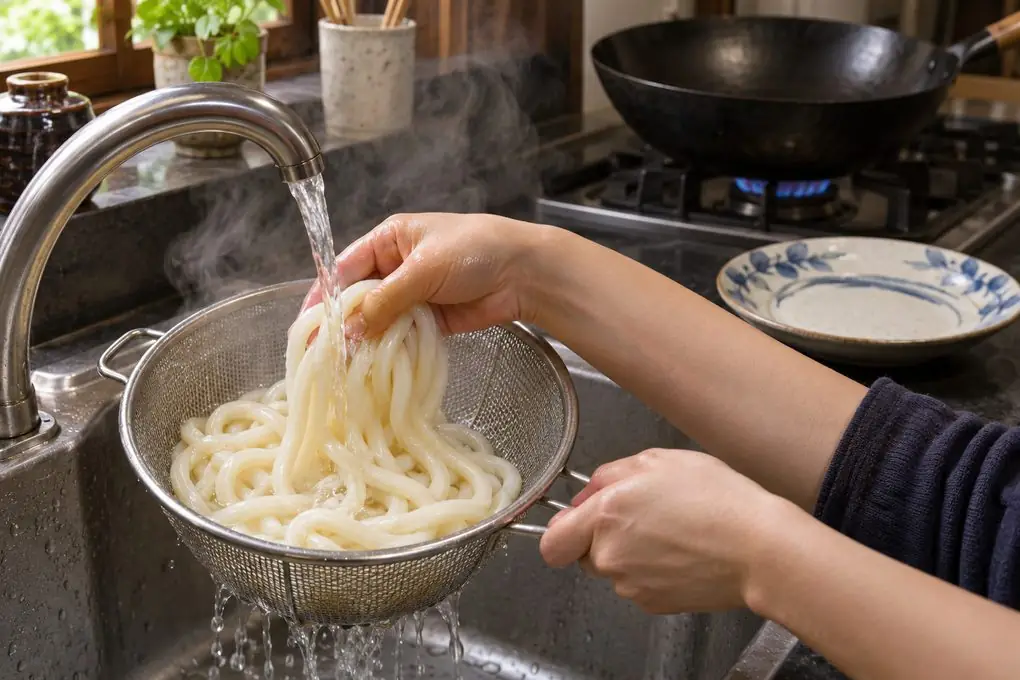
Boil the udon for 5–7 minutes, drain and rinse briefly so the noodles do not stick.
-
Heat the oil in a wok until very hot. Fry the chicken or tofu for 3 minutes.
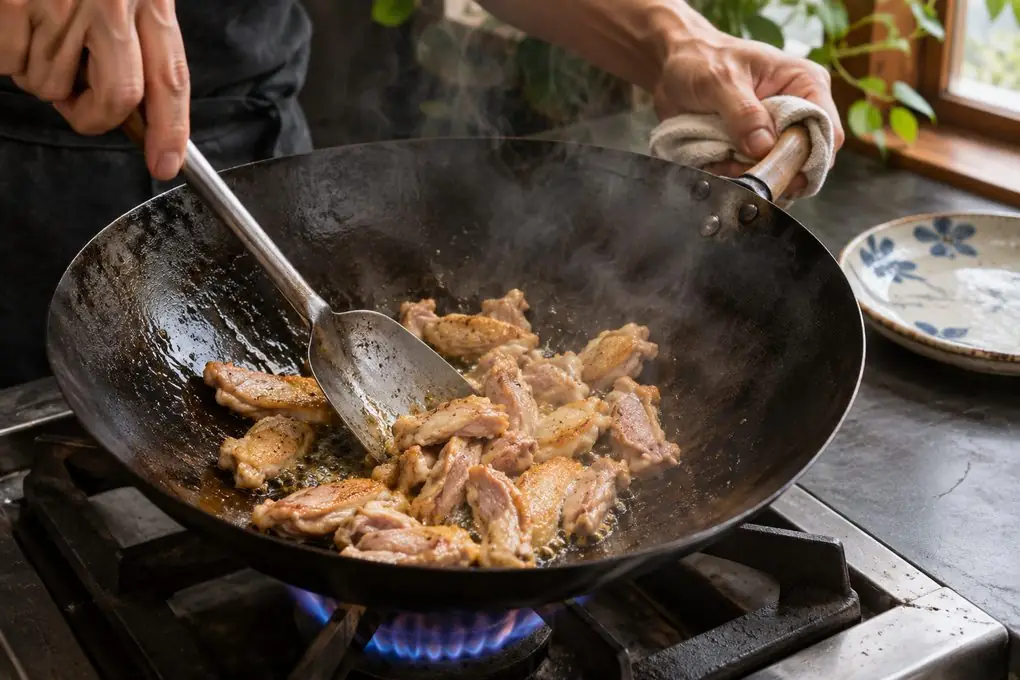
-
Add the vegetables and stir-fry for 2 minutes, so they stay crisp.
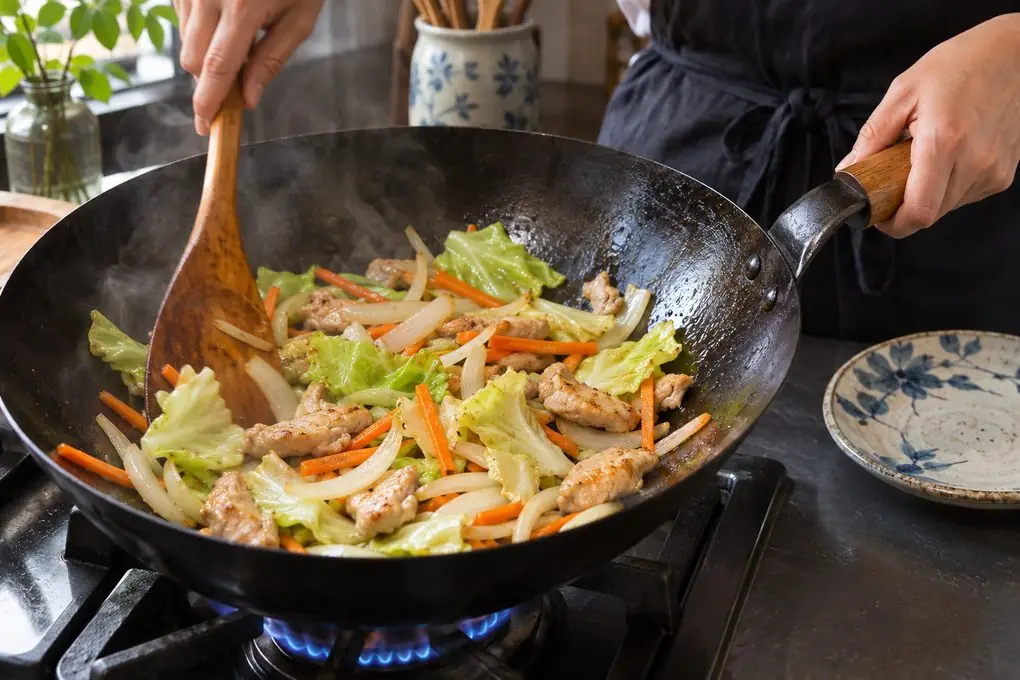
-
Add the noodles and the mixed sauce. Toss for 1–2 minutes until the noodles are glossy and coated.
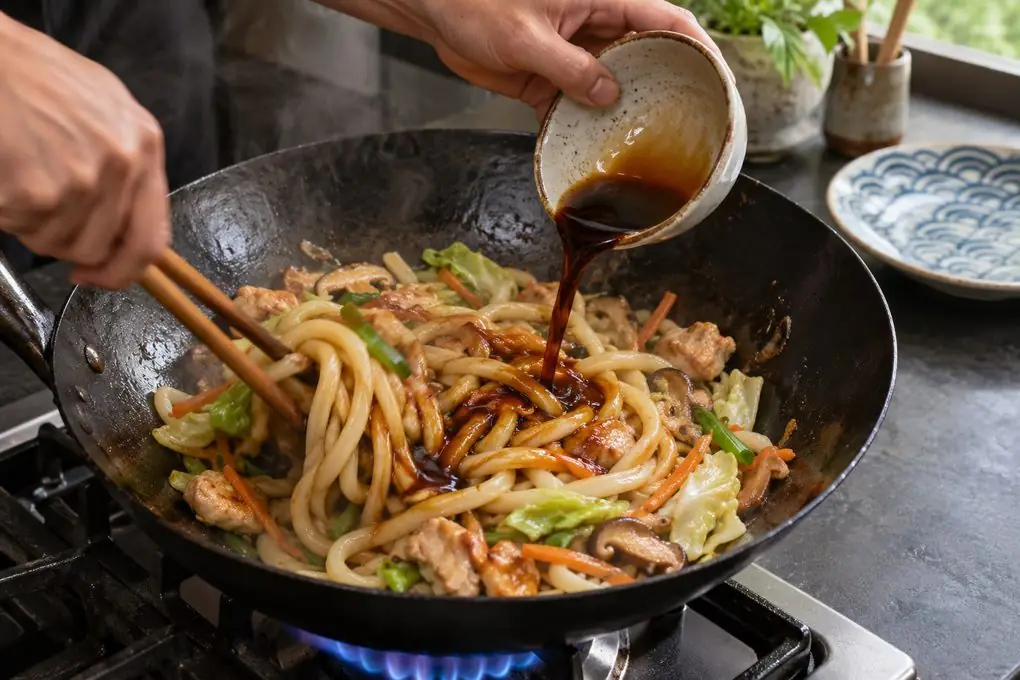
-
Serve with sliced spring onion.
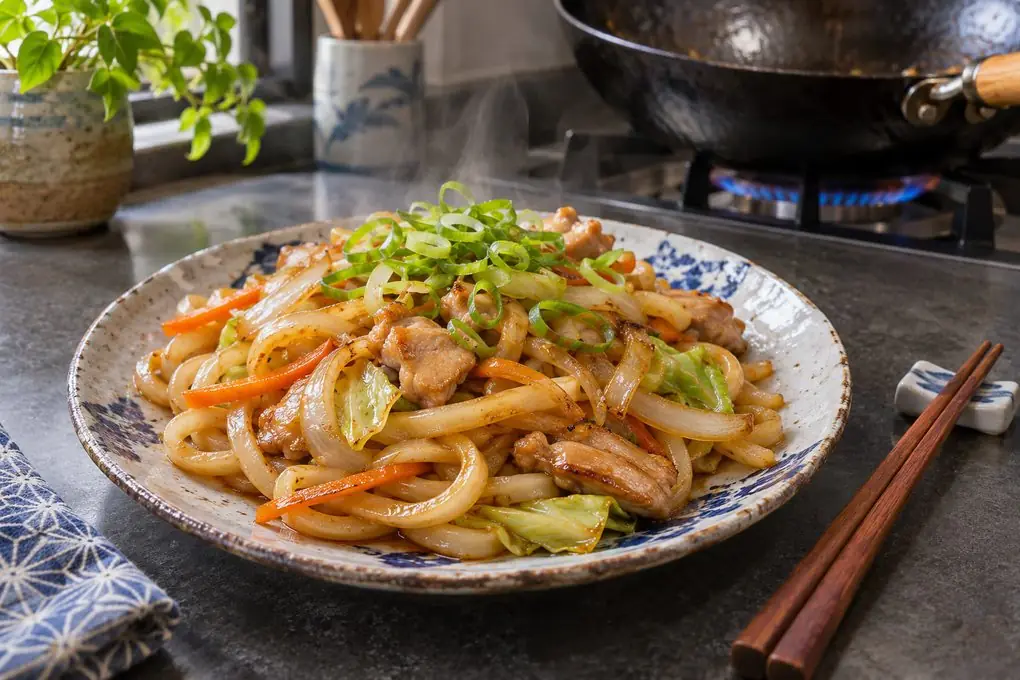
For a restaurant batch, boil and drain the noodles before service, toss with a little oil and portion them; each order then takes about three minutes in the wok.
How kitchens use udon noodles
Japanese restaurants and noodle bars
Udon soups are built to order: broth from the pot, noodles from boiling water, toppings on top. With a pre-cooked noodle, the noodle is ready in the same time as the toppings.
Wok bars
Thick udon is one of the most satisfying noodles in a wok. It takes heavy sauces like teriyaki, black pepper or curry without breaking, and its chew stands up to meat and vegetables.
Canteens and buffets
A thick noodle holds heat and texture longer than a thin one, which matters on a hot counter. Udon is also easy for guests who have never eaten Asian noodles: it is mild, soft and familiar.
Summer menus and salads
Chilled udon with a dipping sauce, or as the base of a noodle salad, gives a menu something fresh for the warm months without changing suppliers.
Why kitchens like our udon noodles
- Speed. 5–7 minutes instead of a long boil for a raw thick noodle.
- Texture. Thick and chewy, with a smooth surface that suits light sauces and broths.
- Versatile. Hot soups, stir-fries and chilled dishes from one product.
- Clean label. Non-fried, no preservatives, EU-standard ingredients, HACCP-certified plant.
- Storage. Dry and shelf-stable instead of chilled or frozen udon.
- Made in Europe. Delivered by truck from the Czech Republic.
Udon noodles wholesale and in bulk
Udon is a natural addition to any Asian or foodservice range: it sells to Japanese restaurants, wok bars and canteens, and to home cooks in 500 g packs. We make ours in the Czech Republic, in 500 g, 4 kg and 7.5 kg bulk packs, with private label on request.
If you are building an Asian noodle range, also look at our newest product. From January 2027 we produce AFoodie Mie Keriting, the curly Indonesian noodle for mie goreng and bami goreng. We are the first and only manufacturer in Europe making these noodles; everyone else has to import them from Indonesia. Pre-orders for the first batch are open: see Mie Keriting: Indonesia’s curly noodles, now made in Europe.
Contact us for samples, pack sizes and wholesale pricing.