What Are Quick Cooking Noodles? How They're Made and Why Kitchens Use Them

Walk into the back of a busy wok bar at lunchtime and you will rarely see anyone boiling raw noodles from scratch. There is no time for it. What you will see is a stack of noodles that were cooked long before they reached the kitchen and only need a few minutes to come back to life. In Europe these are often sold as quick cooking noodles. Here is what that actually means.
A simple definition
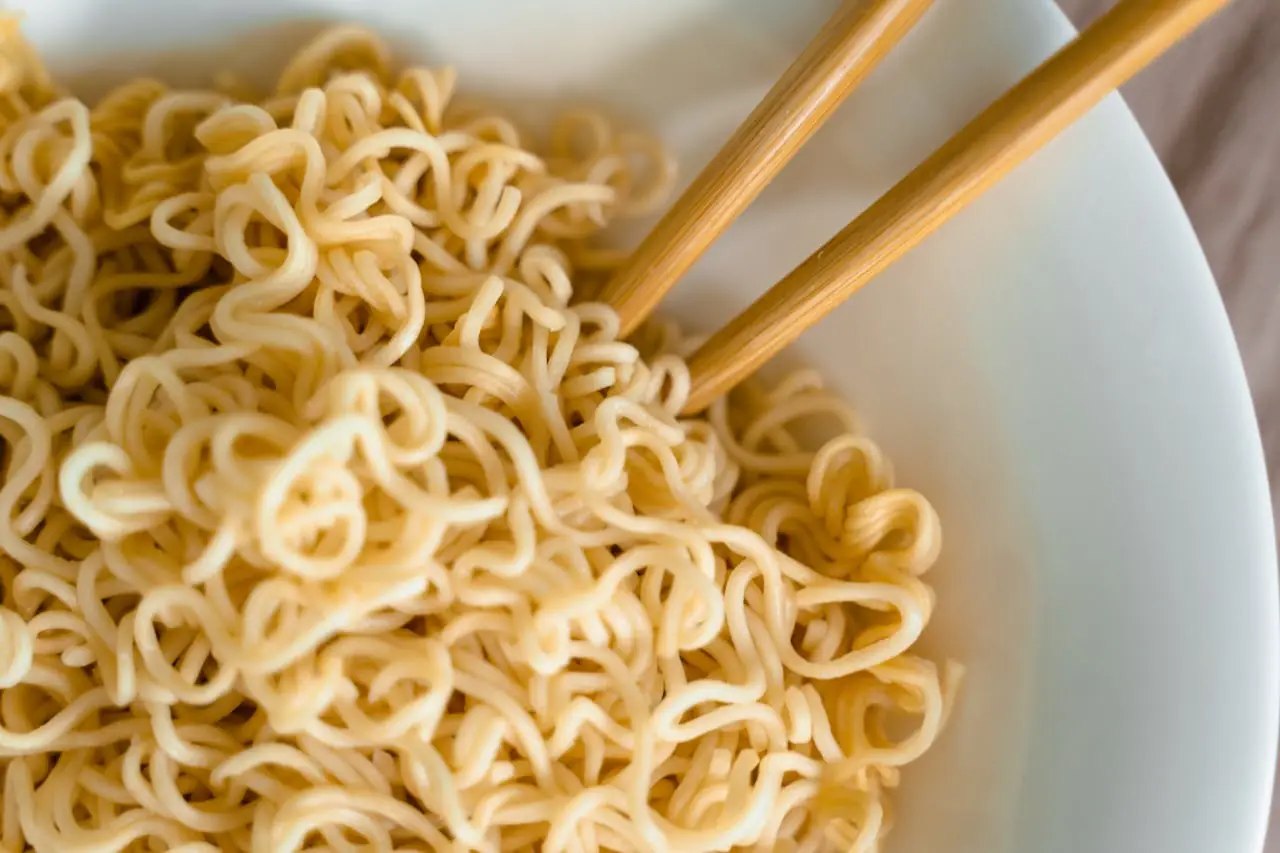
Quick cooking noodles are wheat noodles that are cooked at the factory, dried, and then finished in the kitchen. The cook does not have to bring them from raw to done, only from dry to ready. That is why the cooking times on the pack are short: our ramen-style noodles are labelled 3–4 minutes, our wide flat noodles 5–6 minutes.
They are related to instant noodles, but they are not the same product. The important difference is how the water is taken out.
How they’re made
The basic steps are shared by most pre-cooked noodles, and a scientific review of instant noodle processing covers them in detail:
- Mixing. Flour, water and salt are mixed into a crumbly dough. Many Asian noodles also get a small amount of alkaline salt. In our packs this is sodium carbonate, listed as a raising agent.
- Sheeting and cutting. The dough is rolled into a sheet in several passes, then cut into strands of the right width and shape: thin, wide, wavy.
- Steaming. The strands are steamed until the starch is cooked. This is the step that turns a “noodle you have to cook” into a “noodle you only have to reheat”. German retail packs of our noodles describe them as vorgedämpft, pre-steamed.
- Drying. The cooked noodles are dried to a low moisture content so they keep on the shelf.
- Packing. Into retail packs or larger catering packs.
Drying vs frying
Step 4 is where quick cooking noodles and classic instant noodles go different ways.
Most instant noodle blocks are fried. According to the standard reference figures, the cooked noodles spend one to two minutes in oil at 140–160 °C, which drops their moisture from 30–50 % to 2–5 %. The water boils out fast and leaves a porous structure that rehydrates in a couple of minutes with just hot water. Along the way the noodle picks up oil, typically 15–20 % of its weight.
Non-fried noodles skip the fryer. Air-dried instant noodles, for example, spend 30–40 minutes in hot air at 70–90 °C and end at 8–12 % moisture. There is no oil bath. The noodle stays closer to a plain boiled wheat noodle in taste and texture, which is what a cook wants when the flavour should come from the wok, the sauce or the broth.
All our noodles follow this non-fried route: pre-cooked, made from 100 % EU ingredients, without preservatives, in a HACCP-certified plant.
How they differ from instant and from fresh noodles
| Instant (fried block) | Quick cooking (pre-cooked, non-fried) | Fresh noodles | |
|---|---|---|---|
| Cooked before sale | Yes | Yes | Usually no |
| Drying | Oil frying | Without oil | None |
| Typical use | Soup with sachet | Wok, soup, cold dishes | Restaurant-made dishes |
| Storage | Shelf | Shelf | Chilled |
| Kitchen time | Minutes | Minutes | Cooking from raw |
Instant noodles are built around one portion and a flavour sachet. Quick cooking noodles are an ingredient: no sachet, no seasoning, sold by the bag or the catering pack, and meant to go into your own dish.
Fresh noodles have the shortest list of processing steps, but they need chilled storage and careful stock rotation, and they have to be cooked from raw. Quick cooking noodles give up a little of that “just made” character in exchange for a shelf-stable product that is ready in minutes.
The main types
Pre-cooked noodles come in almost every classic style. Our range on the products page covers:
- MIE noodles: wavy South-East Asian style, for stir-fries and soups.
- Quick Cooking Noodles: the classic all-rounder, described on our product page as exceptionally resistant to soaking.
- Quick Cooking Noodles with Egg: richer, golden, a natural fit for lo mein and pan-fried dishes.
- Udon: thick and chewy, for hot soups, stir-fries and chilled dishes.
- Soba: buckwheat noodles with a nutty flavour.
- Ramen: in the style of lamian, pulled noodles, springy and made for broth.
- Egg noodles: thin and light, for quick home cooking and fast-casual dishes.
- Flat noodles: wide and silky, with a broad surface that holds bold sauces.
- Planed noodles: in the style of Shanxi’s dao xiao mian, with irregular edges.
A word on that springy texture: many Asian wheat noodles are alkaline noodles. The alkaline salts turn the natural flavones in flour yellow and make the noodle more elastic and slightly slippery, which is why ramen and mie look and bite differently from Italian pasta.
How they’re used today
Wok bars and Asian restaurants
This is the classic use. Noodles are blanched for a minute or two, drained and portioned before service, then tossed in a very hot wok with protein, vegetables and sauce when the order comes in. A pre-cooked noodle takes the longest step out of the service.
Canteens, buffets and delivery
When a dish has to stand in a hot counter or travel in a delivery box, a noodle that holds its shape matters. This is where our Quick Cooking Noodles come in: they are made to resist soaking, so they keep their texture in sauce and broth rather than turning soft.
Retail and home cooking
In 250 g and 500 g packs, pre-cooked noodles are a shortcut for home cooks who want a stir-fry on the table in fifteen minutes. No sachet means people choose their own flavours.
Meal prep and ready meals
Food producers and meal-prep kitchens use pre-cooked noodles as a base for chilled noodle salads, bowls and ready meals, because the noodle arrives already cooked and consistent from batch to batch.
Why kitchens like them
- Speed. Minutes instead of a full boil from raw.
- Consistency. The noodle is cooked under controlled conditions at the factory, so the cook gets the same result every time.
- Storage. Dry, shelf-stable packs instead of chilled stock.
- Holding. Our Quick Cooking Noodles are made to resist soaking, which helps on buffets and in delivery.
- Range. One supplier for mie, ramen, udon, soba, egg, flat and planed noodles.
- Made in Europe. EU ingredients and EU production mean short supply chains for European customers.
Getting started
If you have never used pre-cooked noodles in a professional kitchen, the simplest test is a side-by-side: cook your current noodle and ours for the same dish, hold both for twenty minutes, and taste. For ideas, see our recipes for MIE noodles, Quick Cooking Noodles and ramen noodles, or read how the category came about in our short history of quick cooking noodles.
Distributors, restaurants and retailers can contact us for samples, pack sizes and pricing.