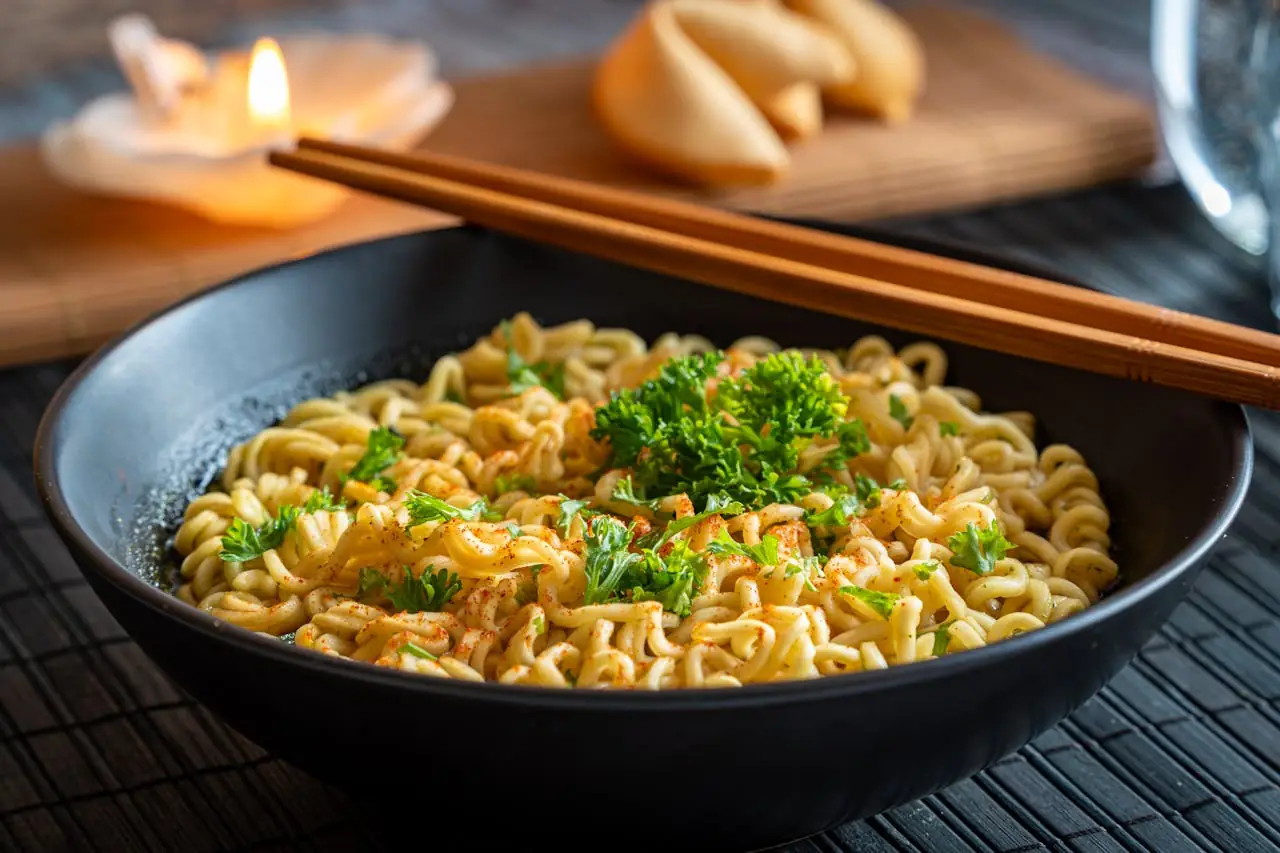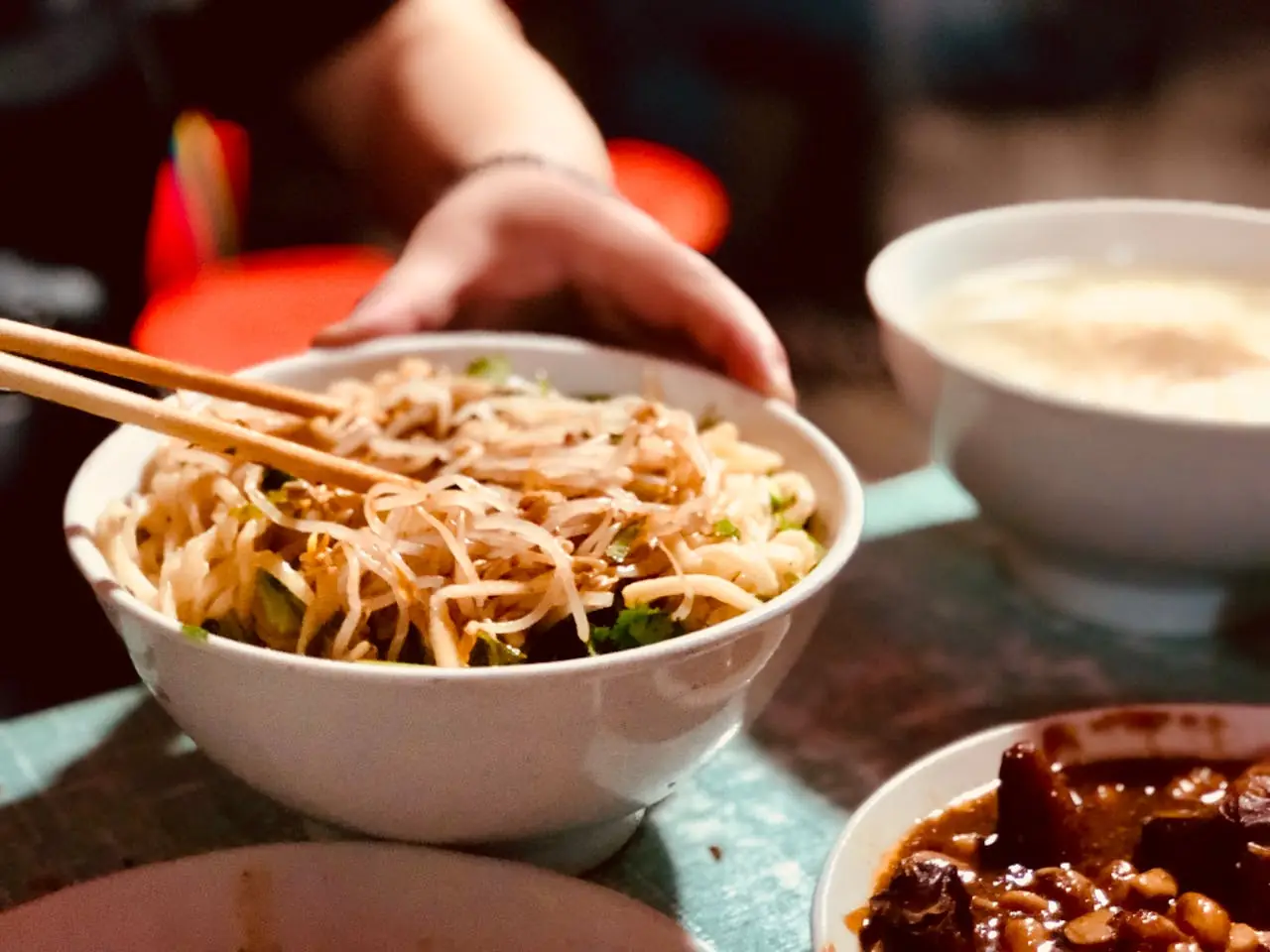
Ramen Noodle Recipes: Quick Shoyu Ramen, Tantanmen-Style Bowl and Hiyashi Chūka

Our ramen noodles are made in the style of Chinese lamian, “pulled noodles”, with the springy bite that ramen is known for. They are pre-cooked and need only 3–4 minutes in boiling water, so the bowl is ready as soon as the broth is.
Ramen is a Japanese-Chinese dish of alkaline wheat noodles in hot broth, most often flavoured with soy sauce or miso. A proper restaurant broth takes many hours. The recipes below are honest shortcuts: good bowls in under 30 minutes, which you can scale up with your own stock.
Cooking the noodles for ramen
- Use plenty of water: at least 1 litre per portion, at a full boil.
- Cook 3–4 minutes, stirring once or twice. Taste at 3 minutes; for ramen the noodles should still have a firm centre, as they keep softening in the hot broth.
- Drain well and shake off the water. Watery noodles dilute the broth.
- Always have the broth hot and the bowl warmed before the noodles go in.
Portion guide: 90–110 g dry noodles per bowl.
1. Quick shoyu ramen
Soy-sauce ramen with a clear chicken broth, a jammy egg and greens.
Serves 2 · Prep 10 min · Cook 20 min
Ingredients
Broth:
- 900 ml chicken stock (homemade or a good low-salt stock)
- 1 piece kombu, about 5 × 5 cm (optional)
- 1 tbsp dried shiitake pieces or 2 dried shiitake (optional)
- 2 garlic cloves, crushed
- 2 slices ginger
Tare (seasoning, divided between the bowls):
- 3 tbsp Japanese soy sauce
- 1 tbsp mirin
- 1 tsp sugar
- 1 tbsp neutral oil or chicken fat
Noodles and toppings:
- 200 g ramen noodles (dry weight)
- 2 eggs
- 150 g cooked chicken, roast pork or tofu, sliced
- 2 small pak choi or a handful of spinach
- 2 spring onions, finely sliced
- 1 sheet nori, halved
- Sesame seeds, chilli oil (optional)
Method
- Eggs: lower the eggs into boiling water and cook for 6½ minutes. Cool in iced water, peel and halve.
- Broth: put stock, kombu, shiitake, garlic and ginger in a pot. Bring to just below a boil, then simmer gently for 10–15 minutes. Remove the kombu after 5 minutes so it doesn’t turn slimy. Strain.
- Tare: warm soy sauce, mirin and sugar in a small pan until the sugar dissolves. Divide between two warmed bowls with the oil.
- Blanch the pak choi in the noodle water for 1 minute, then lift it out.
- Cook the noodles for 3–4 minutes and drain well.
- Pour about 400 ml hot broth into each bowl and stir into the tare. Add the noodles and lift them with chopsticks so they lie neatly. Top with chicken, egg, greens, spring onions and nori.
Tips
- Add the tare to the bowl, not to the whole pot of broth. This is how ramen shops keep one broth for several flavours.
- For a quick “marinated” egg, put the peeled eggs in 3 tbsp soy sauce, 3 tbsp mirin and 3 tbsp water for at least 2 hours, or overnight.
2. Tantanmen-style sesame ramen
Tantanmen is the Japanese take on Sichuan dandan noodles: a rich, nutty sesame broth with spicy pork mince. This version is quick and warming.
Serves 2 · Prep 10 min · Cook 15 min
Ingredients
Spicy pork:
- 200 g pork mince
- 1 tbsp neutral oil
- 1 garlic clove, chopped
- 1 tsp grated ginger
- 1 tbsp doubanjiang (chilli bean paste)
- 1 tsp soy sauce
- 1 tsp sugar
Sesame broth:
- 800 ml chicken or pork stock
- 3 tbsp Chinese sesame paste or tahini
- 2 tbsp soy sauce
- 1 tbsp rice vinegar
- 1–2 tbsp chilli oil
- ½ tsp ground Sichuan pepper (optional)
Noodles and toppings:
- 200 g ramen noodles (dry weight)
- 2 small pak choi or 100 g spinach
- 2 spring onions, sliced
- Crushed roasted peanuts or sesame seeds
Method
- Pork: heat oil in a pan, fry the mince over high heat for 4–5 minutes, breaking it up, until browned and slightly crispy. Add garlic, ginger and doubanjiang and fry for 1 minute. Season with soy sauce and sugar. Keep warm.
- Broth: bring the stock to a simmer. In each bowl, whisk 1½ tbsp sesame paste with 1 tbsp soy sauce, ½ tbsp vinegar and the chilli oil until smooth.
- Blanch the greens for 1 minute, then cook the noodles for 3–4 minutes and drain.
- Pour about 400 ml hot stock into each bowl, whisking it into the sesame base. Add the noodles, then the pork, greens, spring onions and peanuts. Dust with Sichuan pepper.
Tips
- Whisk the sesame base with a little hot stock first, then add the rest. It stops the paste from forming lumps.
- For a vegetarian bowl, replace the pork with chopped mushrooms and crumbled firm tofu, and use vegetable stock.
3. Hiyashi chūka (cold ramen salad)
Hiyashi chūka is a Japanese summer dish of chilled alkaline noodles with colourful toppings arranged in rows and a tangy soy dressing. It is perfect for summer menus and travels well.
Serves 2 · Prep 20 min · Cook 5 min
Ingredients
- 200 g ramen noodles (dry weight)
- 1 cucumber, cut into fine sticks
- 2 eggs, made into a thin omelette and cut into strips
- 100 g cooked ham or chicken, cut into strips
- 1 tomato, cut into wedges
- 60 g sweetcorn or bean sprouts (blanched)
- Pickled ginger, sesame seeds, Japanese mustard (optional)
Dressing:
- 3 tbsp soy sauce
- 3 tbsp rice vinegar
- 2 tbsp sugar
- 1 tbsp sesame oil
- 3 tbsp water
Method
- Mix the dressing until the sugar dissolves. Chill.
- Beat the eggs with a pinch of salt and cook a thin omelette in a lightly oiled pan. Roll it up and cut into thin strips.
- Cook the noodles for 4 minutes, then cool them in iced water, rubbing gently to remove surface starch. Drain very well.
- Put the noodles on plates. Arrange the toppings in neat rows on top. Pour the dressing over just before serving and finish with ginger, sesame and a dab of mustard.
Tips
- Arranging the toppings in separate rows is traditional and makes the dish look generous.
- A creamy variation: whisk 1 tbsp sesame paste into the dressing.
For restaurants: running a ramen station
- One broth, several tares. Keep a single base broth hot and season each bowl with its own tare (shoyu, sesame, miso). Fewer pots, more menu.
- Boil to order. At 3–4 minutes, ramen noodles can be cooked per order in noodle baskets without slowing down the pass. Use plain, unsalted water (the tare seasons the bowl) and change it during long services as it gets starchy.
- Weigh portions dry into small bags or containers before service. One bag, one basket, one bowl.
- Warm the bowls. A cold bowl takes the heat out of the broth in seconds.
- For delivery, pack broth and noodles separately and tell guests to combine them at home. Cold dishes like hiyashi chūka are naturally delivery-friendly.
More recipes
Looking for stir-fries? Try our MIE noodle recipes or the Quick Cooking Noodle recipes. For the full range, including udon and soba, see the products page. For catering packs and samples, contact us.